
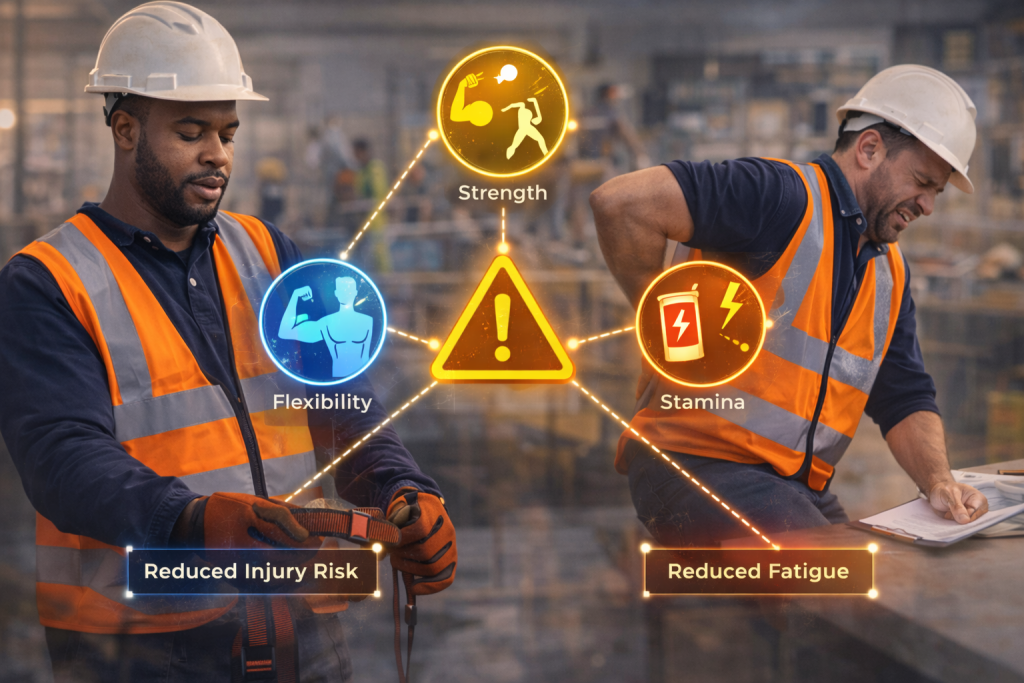
Introduction: Fitness Is a Safety Issue — Not a Lifestyle Choice
On any worksite — industrial, construction, maintenance, logistics, or security — physical fitness is directly linked to safety. Workers who are physically fit are generally more alert, more stable, more resilient, and less prone to injury. Workers with low fitness levels fatigue faster, lose concentration sooner, and face increased risks of musculoskeletal injuries, slips, trips, falls, and operational errors.
Research consistently shows that regular physical activity improves strength, flexibility, endurance, and overall health — all of which reduce injury risk and support sustained performance.
Physical fitness is not about appearance or athleticism.
It is about keeping workers safe, capable, and confident.
1. Why Physical Fitness Matters for Safety
Reduced risk of musculoskeletal injuries
Poor physical conditioning — particularly weak core, back, and stabilising muscles — significantly increases the risk of:
- Strains and sprains
- Back injuries
- Shoulder, knee, and joint problems
Regular movement and basic strength conditioning improve muscle support and joint stability, reducing these common workplace injuries.
Better stamina and reduced fatigue
Fatigue is one of the leading contributors to workplace incidents. Workers with low fitness levels tire more quickly, lose focus earlier, and are more likely to make errors.
Physically active workers tend to maintain energy longer and recover faster, reducing fatigue-related risks — especially during long shifts or physically demanding tasks.
Improved concentration and alertness
Physical activity improves blood flow to the brain, supporting:
- Focus and attention
- Reaction time
- Decision-making
- Situational awareness
In high-risk environments, improved alertness can prevent serious incidents where seconds matter.
Lower absenteeism and illness
Workers who engage in regular physical activity generally:
- Experience fewer illnesses
- Have stronger immune systems
- Take fewer sick days
- Maintain more consistent performance
Studies show that physically active employees are absent less often and incur lower long-term health-related costs.
Better mental health and stress management
Exercise plays a key role in reducing stress, anxiety, and depression — all of which directly affect safety and performance.
A mentally well worker is typically more focused, emotionally stable, and resilient under pressure.
2. The Hidden Costs of Poor Physical Fitness
When physical fitness is neglected, the impact extends beyond the individual. Organisations often experience:
- Increased injury rates
- Higher levels of chronic pain and discomfort
- Greater fatigue and slower recovery
- More errors and near-miss incidents
- Increased absenteeism
- Lower morale and engagement
- Higher long-term health risks
Poor fitness is not only a personal issue — it becomes an organisational risk.
3. What Leaders Can Do to Support Worker Fitness
Leaders do not need to run formal fitness programmes to make a difference. Creating supportive conditions is often enough.
Practical leadership actions include:
- Encouraging stretching and warm-ups
Simple pre-shift stretching improves mobility and reduces injury risk. - Promoting regular movement
Short movement breaks reduce stiffness, fatigue, and discomfort. - Supporting hydration and adequate rest
Dehydration and exhaustion significantly increase safety risks. - Providing ergonomic workstations and tools
Proper ergonomics reduce physical strain and prevent injury. - Modelling healthy behaviour
Workers are more likely to adopt healthy habits when leaders set the example. - Avoiding punitive attitudes toward breaks
Rest is a safety requirement — not a reward or weakness.
4. What Workers Can Do
Workers can strengthen their own safety and wellbeing through small, consistent habits:
- Taking short walks where possible
- Doing basic stretches during the day
- Staying hydrated
- Strengthening core muscles
- Avoiding long periods of uninterrupted sitting or standing
- Getting sufficient sleep
- Eating balanced meals
Small daily actions, maintained over time, make a significant difference.
5. The Long-Term Benefits of a Fit Workforce
A physically fit workforce is:
- Safer
- More productive
- More alert
- More resilient
- More reliable
- More confident
Beyond safety, improved fitness supports morale, teamwork, and a positive workplace culture.
Conclusion: Fitness Is a Safety Tool
Physical fitness is not about appearance — it is about protection.
A fit worker is a safer worker.
A fit team is a stronger team.
A fit workforce is more productive, reliable, and resilient.
Investing in physical fitness is an investment in safety, wellbeing, and long-term organisational success.
At PPC Insight, we believe worker welfare includes recognising physical fitness as a core component of safe, sustainable performance — not an optional extra, but a shared responsibility.
