
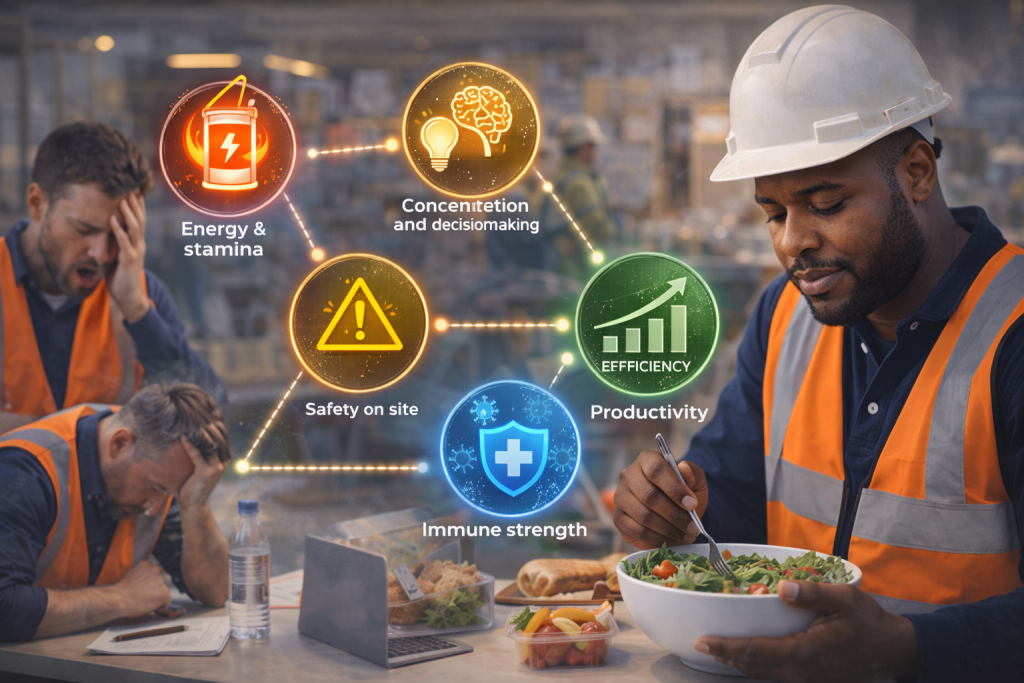
Introduction: Why Nutrition Matters in the Workplace
Nutrition is not simply about eating enough food.
It is about fuelling the body and brain so workers can perform safely, consistently, and with sustained energy.
Research consistently shows that proper nutrition has a direct impact on:
- Energy levels and endurance
- Concentration and decision-making
- Productivity and work quality
- Immune strength
- Mood and emotional stability
- Physical stamina
A well-nourished worker is more alert, more focused, and better equipped to meet the physical and mental demands of the job.
1. How Nutrition Affects Daily Worker Performance
1. Energy and stamina
Balanced meals help maintain steady energy throughout the day. When nutrition is poor, the body conserves energy, leading to fatigue, slower movement, and reduced initiative. Workers may appear disengaged, when in reality their bodies are under-fuelled.
2. Concentration and decision-making
Adequate nutrition supports brain function, improving focus, memory, and problem-solving. Poor nutrition — particularly low blood sugar or iron deficiency — reduces concentration and increases the likelihood of errors and poor judgement.
3. Safety on site
Fatigue and low energy significantly increase accident risk. Undernourished workers tire faster, react more slowly, and are more vulnerable to injury, especially in physically demanding or high-risk environments.
4. Immune strength and absenteeism
A strong immune system depends on proper nutrition. Workers who eat well tend to get sick less often, resulting in fewer absences and more consistent attendance.
2. The Hidden Costs of Poor Nutrition
Poor nutrition carries measurable consequences for both workers and organisations, including:
- Higher accident rates due to fatigue and reduced alertness
- Increased absenteeism from illness
- Lower productivity and slower work pace
- Reduced morale and motivation
- Higher long-term health risks
Studies show that workplace nutrition initiatives can improve nutritional knowledge, reduce risky health behaviours, and even improve measurable health indicators such as body mass index and blood markers.
3. The Benefits of Supporting Good Nutrition at Work
When workplaces actively support healthier eating habits, the benefits are substantial:
Enhanced productivity
Well-nourished workers think more clearly, react faster, and maintain consistent performance throughout the day.
Improved morale
Physical wellbeing influences emotional wellbeing. Workers who feel physically well are generally more positive, cooperative, and engaged.
Fewer sick days
Good nutrition strengthens immunity, reducing illness-related absences and improving reliability.
Long-term health benefits
Healthy eating lowers the risk of chronic diseases, benefiting workers and employers alike through reduced healthcare costs and improved long-term capacity.
4. What Leaders Can Do
Leaders do not need to be nutrition experts to make a meaningful difference. Supportive environments encourage better choices naturally.
Practical actions include:
- Providing access to healthier food options where possible
- Encouraging regular, uninterrupted meal breaks
- Including nutrition awareness in wellness or safety talks
- Avoiding excessively long shifts without proper breaks
- Ensuring access to clean drinking water and promoting hydration
- Promoting awareness without judgement or pressure
Small, consistent actions can significantly improve worker wellbeing.
5. What Workers Can Do
Workers can support their own performance through simple, practical habits:
- Eating balanced meals that include whole foods
- Avoiding skipping breakfast
- Staying well hydrated throughout the day
- Reducing reliance on sugary snacks that cause energy crashes
- Preparing healthy lunches when possible
Even small improvements in daily eating habits can noticeably boost energy, focus, and resilience.
Conclusion: Nutrition Is a Performance Tool
Nutrition is not a luxury or a personal issue alone — it is a workplace performance factor.
A well-nourished workforce is:
- Safer
- More productive
- More focused
- More resilient
- More reliable
Investing in nutrition is an investment in people.
And when people are properly fuelled, supported, and healthy, the entire workplace performs better.
At PPC Insight, we believe worker welfare includes recognising the fundamental role nutrition plays in safety, wellbeing, and sustainable performance.
