
Understanding the Hidden Emotional Cost Workers Carry Every Day
Behind every worker is a personal life filled with relationships, responsibilities, and moments that matter deeply. Birthdays, anniversaries, school events, graduations, funerals, religious celebrations, and family gatherings are not simply dates on a calendar — they are emotional anchors that give people connection, meaning, and identity.
Yet for many workers, especially in high-pressure industries and remote working environments, these moments are frequently sacrificed in order to earn a living.
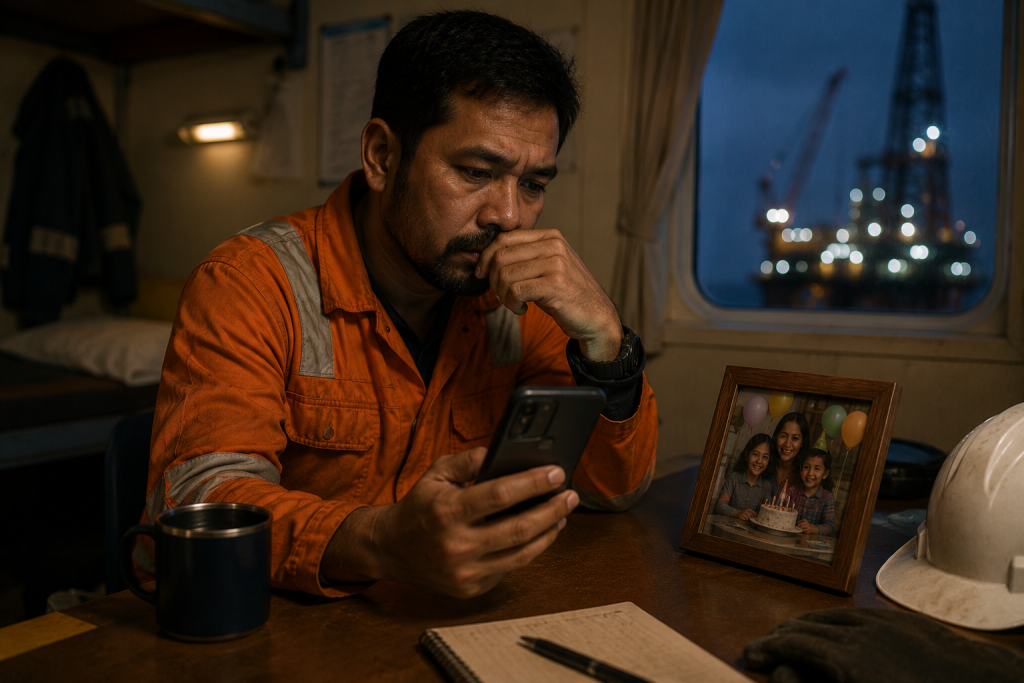
Workers leave home before sunrise. They spend weeks or months away from family. They work overtime to support loved ones financially. And while they are physically present on site, emotionally they are often carrying the pain of what they are missing at home.
These sacrifices create emotional strain that many organisations underestimate.
From the worker’s perspective, missing important family milestones can feel deeply painful. A parent missing a child’s birthday party. A worker unable to attend a funeral. A mother or father hearing about a school achievement over the phone instead of witnessing it in person. These experiences create guilt, sadness, loneliness, and sometimes resentment.
Workers may silently ask themselves:
“Am I sacrificing too much?”
“Will my family understand?”
“Am I missing moments I can never get back?”
This emotional weight does not disappear when the shift begins.
Workers carry these thoughts into meetings, safety-critical tasks, and operational decisions. Emotional distress affects concentration, patience, hazard awareness, and communication. A distracted worker is not simply “unfocused” — they may be emotionally burdened by separation, guilt, or worry about the people they love.
From the leadership perspective, understanding this emotional toll is essential for both worker welfare and workplace safety.
Leaders sometimes focus only on physical presence:
“The worker arrived.”
“The shift is covered.”
“The task is being completed.”
But emotional presence matters equally.
A worker preoccupied by emotional pain or family strain may struggle to stay mentally engaged. They may become quieter, more withdrawn, or more fatigued. Decision-making may slow. Situational awareness may weaken. Small mistakes become more likely because emotional stress consumes mental energy.
This is why family-related emotional strain should not be viewed as separate from operational performance.
It is directly connected to it.
Importantly, workers do not expect leaders to solve every family challenge. What workers often need most is empathy, understanding, and recognition of their humanity.
Small acts of emotional awareness from leadership can have enormous impact:
- Acknowledging important dates
- Allowing brief calls home
- Showing understanding during emergencies
- Offering flexibility when operationally possible
- Asking workers how they are coping
- Responding with compassion instead of frustration
These actions communicate:
“You are more than your productivity.”
“Your family matters.”
“Your life outside work matters too.”
This emotional recognition strengthens trust.
Workers who feel supported during difficult emotional periods are more likely to remain engaged, communicate openly, and maintain stronger emotional connection to the organisation. They no longer feel forced to choose between being a worker and being a human being.
Leaders must also understand that workers often hide emotional distress because they fear appearing weak, unprofessional, or unreliable. Many workers silently carry grief, guilt, or emotional exhaustion while continuing to perform physically demanding tasks.
This silent suffering can become dangerous in high-risk environments.
Workers under emotional strain may:
- Become distracted
- Take shortcuts unintentionally
- Miss hazards
- Withdraw socially
- Struggle with communication
- Experience fatigue and sleep disruption
Supportive leadership reduces these risks by creating emotional safety.
Importantly, recognising family sacrifice does not weaken professionalism. In fact, emotionally intelligent leadership strengthens loyalty, morale, and commitment because workers feel genuinely valued as people.
Workers remember leaders who showed understanding during emotionally difficult times.
Years later, they may not remember production targets or deadlines — but they will remember:
- Who allowed them to call home
- Who acknowledged their child’s graduation
- Who showed compassion after a family loss
- Who treated them like a human being instead of a labour unit
These moments shape workplace culture more deeply than many leaders realise.
Strong organisations understand that workers do not leave their emotions at the gate. Human beings cannot separate family life from workplace life completely. Emotional experiences travel with people into every shift, every task, and every interaction.
The most effective leaders therefore balance operational demands with human awareness.
Because when workers feel emotionally supported, they think more clearly, communicate more openly, and perform more safely.
And sometimes, one moment of empathy from leadership can help carry the emotional weight a worker has been carrying alone for far too long.
