
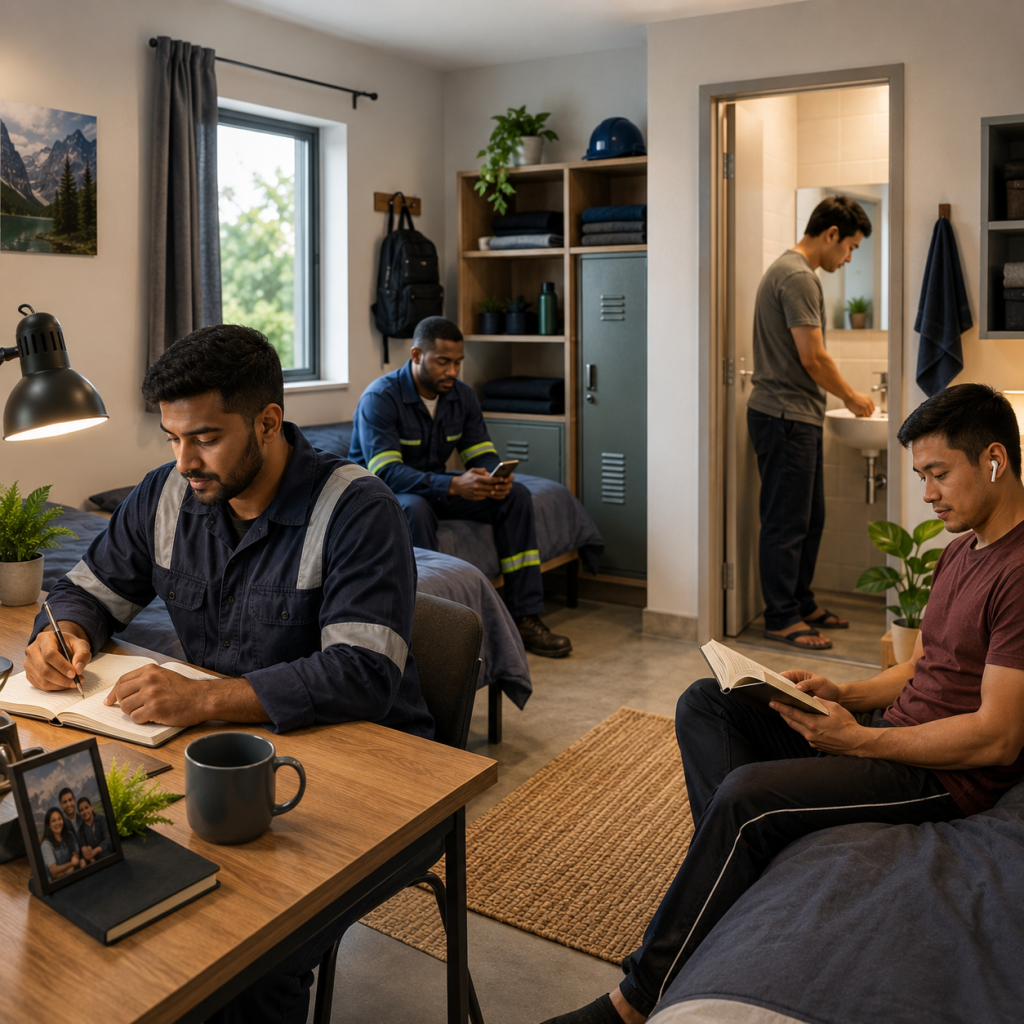
Why Personal Space Is Essential for Dignity, Recovery, and Safety
Privacy is one of the most overlooked aspects of worker welfare, yet it is one of the most important human needs in any living environment. For workers living in shared accommodation, camps, hostels, or temporary housing, privacy often determines whether they can truly rest, recover emotionally, and maintain dignity after demanding shifts.
When privacy is neglected, emotional strain increases.
When privacy is protected, wellbeing improves.
In high-risk industries, where workers already face physical fatigue, emotional stress, and long hours, accommodation should function as a place of recovery and restoration. But overcrowded rooms, constant noise, shared facilities, lack of personal space, and poor living conditions can prevent workers from recovering properly between shifts.
From the worker’s perspective, privacy is not a luxury.
Privacy is dignity.
It is the ability to:
- Rest without constant interruption
- Think quietly
- Process emotions privately
- Sleep properly
- Communicate with family confidentially
- Decompress after stressful work
- Feel emotionally safe
Without privacy, workers may feel constantly exposed, watched, or emotionally overwhelmed. Even highly social people need periods of personal space to regulate stress and recover mentally.
The absence of privacy creates emotional fatigue.
Workers living in crowded environments often struggle with:
- Sleep disruption
- Irritability
- Increased conflict
- Anxiety
- Emotional exhaustion
- Difficulty concentrating
- Reduced patience
- Social withdrawal
Over time, these conditions directly affect workplace performance and safety.
A worker who cannot rest properly does not arrive fully recovered for the next shift. Mental fatigue accumulates. Emotional tolerance decreases. Hazard awareness weakens. Small frustrations escalate faster because workers are already psychologically depleted before work even begins.
From the leadership perspective, privacy should therefore be viewed as a welfare investment and a safety strategy.
Well-rested workers:
- Think more clearly
- Communicate more effectively
- Make better decisions
- Manage emotions more successfully
- Recover faster from stress
- Perform more safely
Poor accommodation conditions create the opposite outcome.
Leaders sometimes focus heavily on workplace safety systems while overlooking the living conditions shaping worker wellbeing outside operational hours. But workers do not suddenly recover the moment their shift ends. Recovery depends heavily on the environment they return to afterward.
Accommodation is part of the safety system.
Importantly, privacy also affects emotional dignity. Workers need spaces where they can be vulnerable without judgment — whether they are calling family, processing personal stress, praying, grieving, or simply resting quietly.
Constant exposure to others without personal space increases emotional tension and social fatigue. Small irritations become larger conflicts because workers lack opportunities to mentally reset.
This is especially important in multicultural or shared living environments where different habits, languages, schedules, and cultural norms exist. Without adequate privacy and respectful boundaries, frustration and conflict can escalate quickly.
Leaders can significantly improve worker wellbeing by prioritising:
- Reduced overcrowding
- Adequate personal space
- Lockable storage for belongings
- Quiet zones for rest
- Clean and private ablution facilities
- Respectful accommodation supervision
- Clear boundaries around personal space
- Proper ventilation and lighting
These improvements communicate:
“Your wellbeing matters.”
“You deserve dignity.”
“Your recovery is important.”
The psychological impact of these messages is powerful.
Workers who feel respected in their living environment are more likely to feel emotionally secure, valued, and connected to the organisation. They experience lower stress levels and stronger morale because their basic human needs are being acknowledged.
Importantly, leaders must avoid viewing accommodation purely through a compliance lens. Meeting minimum standards is not always enough to create environments that genuinely support recovery and dignity.
The goal should not simply be “housing workers.”
The goal should be creating conditions where workers can recover physically, emotionally, and mentally.
This is especially critical in physically demanding industries where fatigue and stress already place significant strain on the nervous system.
Sleep deprivation, emotional exhaustion, and unresolved stress are major contributors to:
- Poor decision-making
- Reduced concentration
- Emotional reactivity
- Slower response times
- Increased incident risk
Accommodation conditions therefore influence operational performance more than many organisations realise.
Privacy also strengthens trust.
Workers notice when leadership invests in their wellbeing outside immediate production needs. They recognise when organisations genuinely care about their quality of life rather than simply extracting labour.
This builds loyalty, morale, and stronger emotional connection to the workplace.
Ultimately, privacy is not about isolation.
It is about restoration.
Every worker needs moments where they can simply breathe, think, rest, and feel human again after long, demanding days.
And when leaders protect privacy, they protect dignity, recovery, emotional wellbeing, and ultimately workplace safety itself.
