
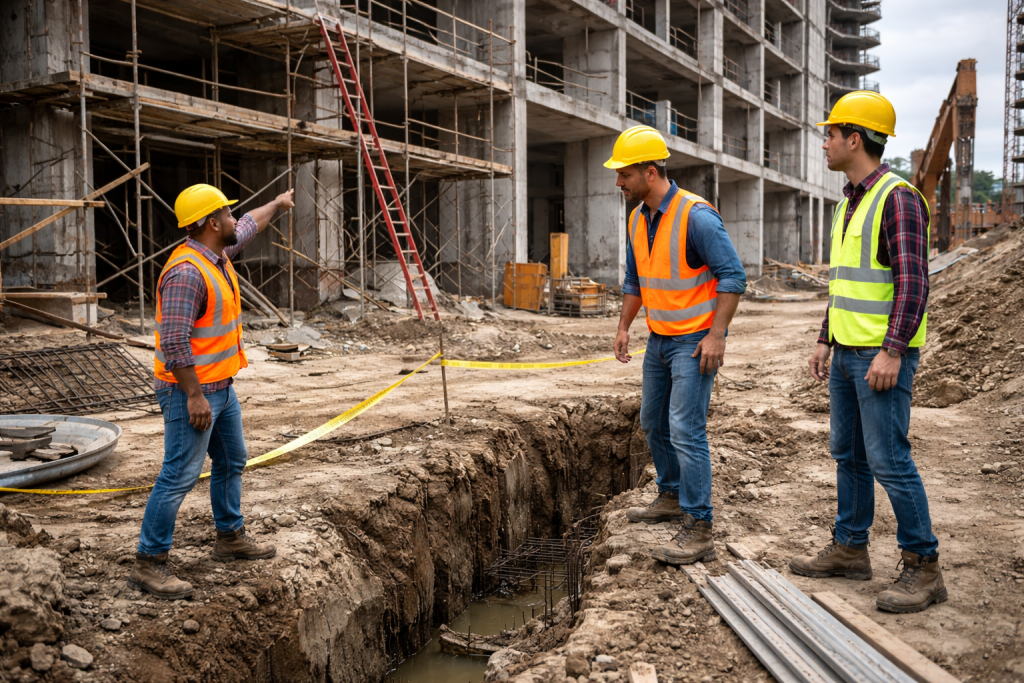
Construction workers carry the physical and human burden of our built environment. They operate in complex, high-risk settings where safety, dignity, and fair treatment are not optional considerations—they are fundamental requirements for a stable workforce and successful project delivery.
Yet across South Africa and globally, when workers speak openly about welfare, the same core concerns surface repeatedly. These concerns are not abstract. They are immediate, practical, and deeply human.
This article explores the three most pressing worker welfare issues in construction, how workers can raise concerns safely and constructively, and what leaders must do to address them effectively.
1. Safety and Health Risks on Site
For construction workers, safety is not theoretical—it is a daily calculation. The primary concern remains simple and profound: Will I return home safely at the end of the shift?
What Workers Are Concerned About
- Inadequate or poorly maintained personal protective equipment (PPE)
- Unsafe scaffolding, trenches, or elevated work areas
- Fatigue resulting from long hours or chronic understaffing
- Insufficient training for high-risk tasks
- Pressure to work through known hazards to meet deadlines
How Workers Can Raise Their Voices
- Report hazards immediately through formal channels such as supervisors, safety representatives, or OHS committees
- Use anonymous reporting mechanisms where available
- Engage actively in toolbox talks and safety briefings
- Document unsafe conditions with dates, times, and witnesses
What Leaders Must Do
- Establish a prevention-first culture where safety is non-negotiable
- Ensure comprehensive induction and task-specific training for all workers
- Conduct regular risk assessments and close findings transparently
- Empower safety representatives with real authority and support
- Reward hazard reporting rather than discouraging it
A safe site is not created by paperwork alone—it is created by leadership behaviour.
2. Fair Wages, Job Security, and Living Conditions
Construction workers often face significant uncertainty stemming from short-term contracts, inconsistent pay, and living conditions that undermine dignity and wellbeing.
What Workers Are Concerned About
- Late or incomplete wage payments
- Unclear or verbal employment agreements
- Inadequate accommodation, sanitation, or transport arrangements
- Limited recourse when wages are withheld or deductions are unfair
- Fear of job loss if concerns are raised
How Workers Can Raise Their Voices
- Request written contracts and retain copies
- Use worker committees or elected representatives to raise collective concerns
- Approach HR or site management with documented evidence
- Seek assistance from labour centres or worker welfare organisations where necessary
What Leaders Must Do
- Provide transparent employment contracts and pay wages on time, without exception
- Ensure accommodation, ablutions, and food facilities meet legal and ethical standards
- Create predictable work schedules and communicate changes early
- Implement grievance mechanisms that are confidential, accessible, and responsive
- Treat workers as partners in delivery—not cost items to be managed
Fairness is not a concession. It is a right.
3. Respect, Voice, and Dignity
Beyond physical safety and financial security, workers seek something deeply human: respect.
What Workers Are Concerned About
- Being ignored or dismissed when raising concerns
- Bullying, intimidation, or discriminatory behaviour
- Lack of transparency in decision-making
- Leadership visibility limited to inspections rather than daily engagement
How Workers Can Raise Their Voices
- Use structured feedback mechanisms such as worker forums, suggestion systems, or digital platforms
- Elect representatives to speak on behalf of teams
- Participate honestly in welfare surveys and engagement sessions
- Raise issues early before they escalate into conflict
What Leaders Must Do
- Remain visible, approachable, and genuinely interested in worker experiences
- Train supervisors in respectful communication and conflict management
- Close the feedback loop by communicating actions taken in response to concerns
- Recognise and celebrate worker contributions and excellence
- Build a culture where speaking up is safe, expected, and valued
Respect is the foundation of trust—and trust underpins performance.
The Path Forward: Building a Culture Where Every Worker’s Voice Matters
Worker welfare is not a checklist exercise. It is a cultural commitment.
A healthy construction environment is one where:
- Workers feel safe
- Workers feel heard
- Workers feel valued
When leaders listen, workers speak.
When workers speak, organisations improve.
When organisations improve, everyone benefits—from productivity and morale to long-term sustainability.
Construction is a demanding industry, but it does not have to be a dehumanising one. By addressing core welfare concerns and creating genuine channels for voice and accountability, leaders can build sites where dignity is lived—not merely promised.
At Principles & Practice Consultancy (PPC), we work with organisations to embed worker welfare into everyday operations—strengthening trust, reducing risk, and enabling ethical, high-performing project delivery.
Worker welfare is not an add-on.
It is the foundation of excellence.
