
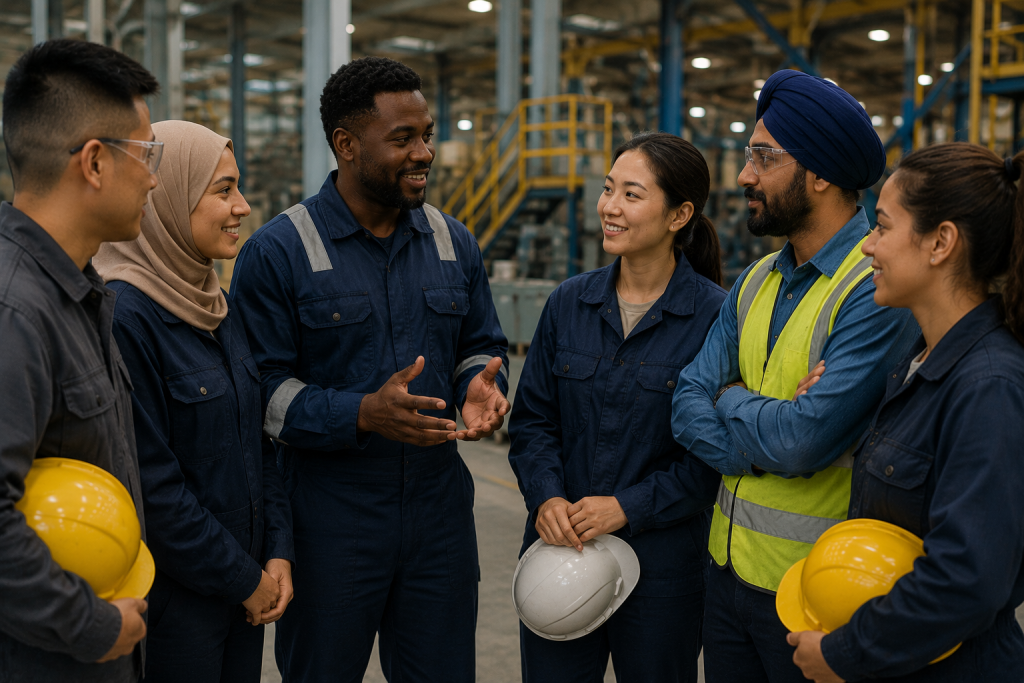
Creating Respect, Inclusion, and Stronger Communication Across Differences
Modern workplaces are increasingly diverse. Workers from different languages, cultures, religions, traditions, backgrounds, and life experiences come together to achieve shared goals. This diversity can become one of an organisation’s greatest strengths — but only when leaders intentionally create an environment of respect, inclusion, and cultural harmony.
Without thoughtful leadership, diversity can also create misunderstanding, division, and communication barriers.
Cultural harmony does not happen automatically.
It must be built deliberately through leadership behaviour, emotional intelligence, and organisational culture.
In high-pressure environments, small cultural misunderstandings can escalate quickly if workers feel disrespected, excluded, or judged. Tone, gestures, humour, communication styles, body language, and approaches to authority may be interpreted differently across cultures.
What feels normal or harmless to one person may feel offensive or dismissive to another.
For example:
- Direct communication may feel honest to some but aggressive to others.
- Silence may represent respect in one culture and disengagement in another.
- Eye contact may signal confidence for some and disrespect for others.
- Humour or sarcasm may create connection in one group but embarrassment in another.
Leaders who ignore these differences risk creating emotional tension within teams.
From the worker’s perspective, cultural harmony means more than simply “getting along.” It means feeling accepted without needing to hide who they are. Workers want to feel that their identity, language, traditions, and humanity are respected within the workplace.
This includes:
- Feeling safe speaking their home language during breaks
- Being respected regardless of accent or background
- Knowing cultural practices will not be mocked
- Feeling included in conversations and decisions
- Trusting leadership to address discrimination fairly
When workers feel culturally accepted, they experience greater psychological safety and belonging.
Belonging matters deeply because people naturally perform better in environments where they feel emotionally secure. Workers who feel accepted are more willing to communicate openly, collaborate across teams, and support one another during pressure.
In contrast, workers who feel judged or excluded often withdraw socially and emotionally.
This withdrawal weakens:
- Communication
- Trust
- Teamwork
- Collaboration
- Hazard reporting
- Emotional safety
In high-risk industries, these breakdowns can directly affect operational safety.
From the leadership perspective, cultural harmony is therefore not only a diversity objective — it is a performance and safety strategy.
Teams that trust one another communicate more effectively. They share information more openly, resolve conflict faster, and support each other during difficult situations. Diverse perspectives also improve problem-solving because teams benefit from wider experiences and ways of thinking.
But these benefits only emerge when leaders actively build inclusive environments.
Leaders play a critical role in setting the emotional tone of multicultural teams. Workers observe closely how leadership responds to differences, conflict, stereotypes, and disrespectful behaviour.
If leaders tolerate exclusion, mockery, or bias, workers quickly learn that cultural safety does not exist.
But when leaders consistently model respect, fairness, and curiosity about different backgrounds, teams become stronger and more united.
Practical leadership behaviours that build cultural harmony include:
- Encouraging respect for all languages and backgrounds
- Creating mixed-culture teams and collaboration opportunities
- Addressing stereotypes or discriminatory comments immediately
- Celebrating cultural and religious holidays respectfully
- Ensuring equal treatment and opportunities
- Training supervisors in cultural intelligence and emotional awareness
- Encouraging workers to learn from one another
Importantly, cultural harmony is not about eliminating differences.
It is about creating environments where differences are respected rather than feared.
Strong leaders understand that workers should not have to suppress their identity to feel accepted at work. Inclusion strengthens when people can contribute authentically without fear of judgment or exclusion.
Psychological safety grows when workers believe:
“I can be myself here.”
“My culture is respected.”
“My voice matters regardless of my background.”
These feelings directly influence behaviour.
Workers who feel culturally safe are more likely to:
- Speak openly
- Participate actively
- Support teammates
- Raise concerns early
- Build positive relationships across groups
- Contribute ideas confidently
Cultural harmony also reduces conflict significantly. Many workplace tensions are not caused by bad intentions but by misunderstanding, assumptions, or lack of awareness. Leaders who encourage respectful dialogue and curiosity help teams navigate differences constructively instead of defensively.
Importantly, harmony requires consistency.
One diversity workshop or policy is not enough. Workers evaluate inclusion through daily experience:
- How leaders speak
- Who gets listened to
- Who gets opportunities
- How conflict is handled
- Whether disrespect is challenged
- Whether fairness is visible
Culture is shaped through repeated behaviour, not slogans.
In today’s workplaces, diversity is inevitable.
But harmony is intentional.
And when leaders intentionally build culturally respectful environments, teams become more connected, more resilient, more innovative, and safer for everyone involved.
