
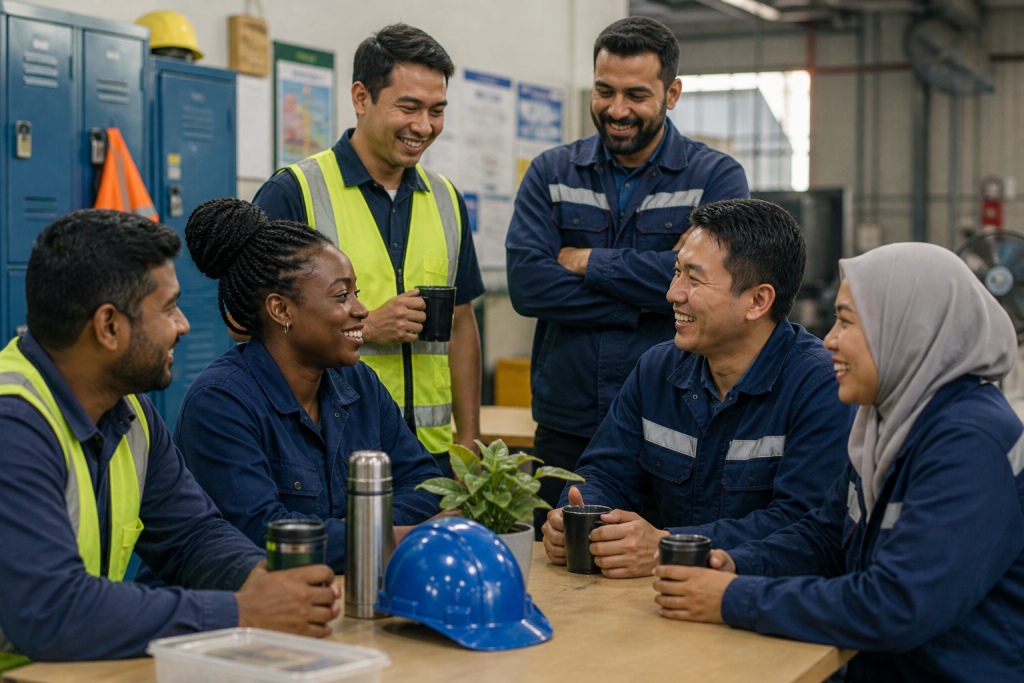
Introduction: Belonging Is a Human Need — Not a Contract Benefit
Across many worksites, migrant and temporary workers play a critical role in keeping operations running. They bring skills, experience, and resilience — yet they are often the most invisible members of the workforce.
Belonging should never depend on contract type, length of service, or place of origin.
It is a basic human need and a core component of worker welfare.
When workers feel excluded or unseen, trust erodes, communication suffers, and safety is compromised. When workers feel they belong, teams become stronger, more cooperative, and more resilient.
1. Understanding the Challenges Migrant and Temporary Workers Face
For migrant and temporary workers, the workplace can feel unfamiliar and isolating. Many are navigating multiple pressures at once, including:
- Language and communication barriers
- Distance from family and support systems
- Unfamiliar site rules, routines, and expectations
- Fear of making mistakes or “standing out”
- Job insecurity linked to temporary contracts
- Being treated differently or excluded socially
These challenges are often subtle and unspoken. Even small moments — being left out of conversations or informal gatherings — can reinforce a sense of not belonging.
Awareness is the first step toward inclusion.
2. What Full-Time and Established Workers Can Do
Belonging does not happen automatically. It is created through everyday actions.
Full-time and established workers play a powerful role in shaping workplace culture by:
- Starting conversations
A simple greeting or question builds connection. - Explaining routines and expectations
Not everyone knows the “unwritten rules.” - Including others socially
Lunch breaks, toolbox talks, and informal chats matter. - Using respectful language
Avoid jokes or comments about accents, backgrounds, or origins. - Sharing information openly
Temporary workers are often excluded unintentionally. - Speaking up against exclusion
Silence allows exclusion to continue.
Inclusion is not complicated — it is intentional.
3. The Role of Migrant and Temporary Workers
Belonging is a shared process.
Migrant and temporary workers bring valuable perspectives and skills. Where it feels safe to do so, they can:
- Ask questions when unsure
- Share experience and ideas
- Participate in conversations
- Offer support to others
- Raise safety concerns early
- Build small connections over time
Belonging grows through mutual respect and shared effort.
4. The Role of Leadership
Leadership sets the tone for inclusion.
Leaders have a responsibility to ensure that belonging is not left to chance. This includes:
- Treating all workers with equal respect, regardless of contract type
- Ensuring communication reaches everyone
- Acting immediately against discrimination or exclusion
- Providing proper induction for migrant and temporary workers
- Encouraging team integration and collaboration
- Recognising the contribution of migrant workers
- Creating safe channels for all workers to speak up
When leaders model inclusive behaviour, it becomes the standard across the site.
Why Belonging Matters
Creating belonging has measurable benefits:
- Improved safety through better communication
- Stronger teamwork and cooperation
- Higher morale and engagement
- Reduced conflict and misunderstandings
- Better retention and reliability
- A healthier, more respectful workplace culture
Belonging is not “soft.”
It is essential to safe and effective operations.
Conclusion: Belonging Builds Stronger Workplaces
Belonging is not a privilege.
It is a basic human need.
Migrant and temporary workers bring strength, diversity, and skill to the workplace. When they are included, respected, and valued, everyone benefits.
Creating belonging does not require complex programmes or policies.
It begins with small acts of humanity — and grows into a culture of dignity, unity, and trust.
At PPC Insight, we believe worker welfare means creating workplaces where every person — permanent or temporary, local or migrant — knows they belong.
