
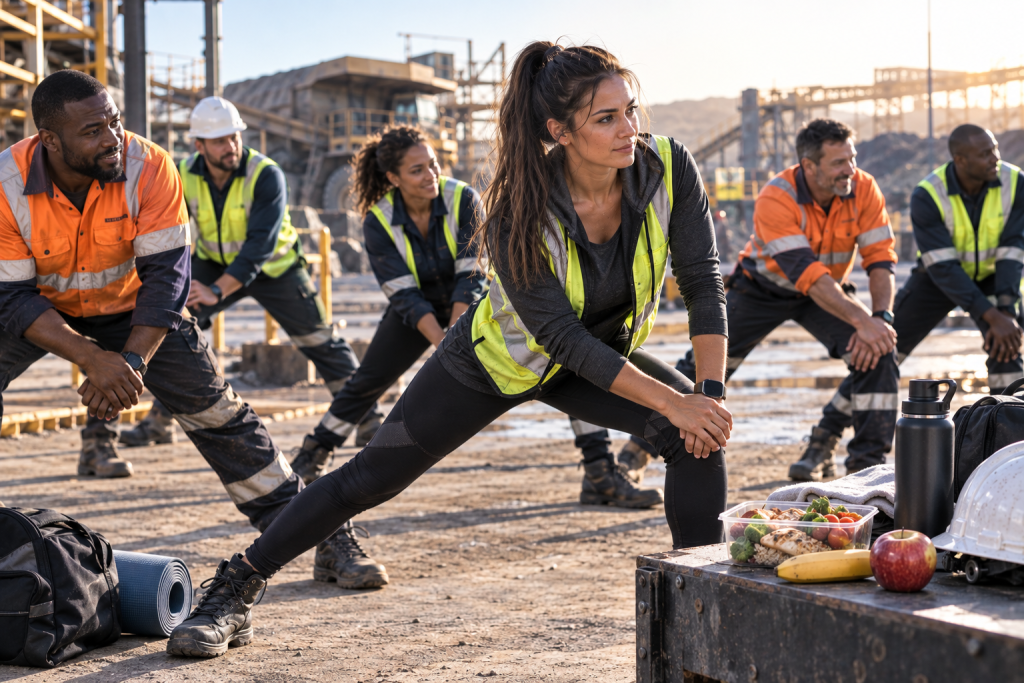
Why Worker Health Directly Influences Awareness, Resilience, and Performance
Physical fitness is often viewed only through the lens of health or appearance.
But in high-risk workplaces, physical fitness plays a much deeper role. It directly influences worker safety, endurance, concentration, emotional resilience, and the ability to respond effectively under pressure.
Workers rely on their bodies every day to:
- Maintain balance
- React quickly
- Manage fatigue
- Sustain concentration
- Handle physical strain
- Recover from stress
- Perform demanding tasks safely
When physical health declines, safety performance often declines alongside it.
From the worker’s perspective, physical exhaustion accumulates gradually.
Workers may experience:
- Chronic fatigue
- Muscle strain
- Poor sleep
- Low energy
- Reduced stamina
- Physical pain
- Slower recovery between shifts
Many continue pushing through these symptoms because they feel pressure to remain productive regardless of how their body feels.
But the body eventually affects the mind.
Physical fatigue weakens:
- Concentration
- Coordination
- Reaction time
- Situational awareness
- Emotional patience
- Cognitive endurance
This creates increased vulnerability to mistakes and injuries.
The Body and Brain Work Together
One of the most overlooked realities in workplace safety is that physical and psychological wellbeing are deeply connected.
The brain relies on the body for:
- Oxygen
- Blood flow
- Energy regulation
- Stress management
- Nervous system stability
Workers in poor physical condition often experience higher levels of:
- Fatigue
- Irritability
- Emotional stress
- Cognitive overload
- Sleep disruption
This directly affects workplace functioning.
A physically depleted worker may:
- Miss hazards more easily
- Struggle with long periods of focus
- React more slowly during emergencies
- Experience reduced coordination
- Become emotionally reactive under pressure
In high-risk environments, these impairments can have serious consequences.
Physical Fitness Improves Emotional Resilience
Physical fitness also strengthens emotional wellbeing.
Regular movement and physical conditioning improve:
- Stress regulation
- Mood stability
- Sleep quality
- Energy levels
- Mental clarity
- Recovery from pressure
Exercise helps regulate stress hormones and supports nervous system recovery. Workers who maintain healthier physical conditioning often cope better with emotional and operational stress because their body can manage strain more effectively.
This does not mean workers need to become athletes.
It means the body functions more safely and sustainably when workers:
- Sleep adequately
- Stay active
- Hydrate properly
- Recover physically
- Maintain basic health and movement
Small improvements in physical wellbeing can create major improvements in:
- Focus
- Endurance
- Alertness
- Psychological resilience
Fitness and High-Risk Work Environments
In physically demanding industries, fitness becomes especially important.
Workers in:
- Construction
- Mining
- Manufacturing
- Security
- Logistics
- Emergency response
- Agriculture
often perform tasks requiring:
- Strength
- Endurance
- Balance
- Coordination
- Rapid response
- Sustained awareness
Poor physical conditioning increases strain during these tasks and reduces the body’s ability to recover afterward.
This creates cumulative fatigue over time.
Workers who are physically exhausted often rely on mental effort alone to compensate — but mental focus eventually weakens when the body is overloaded continuously.
Leadership and Organisational Responsibility
Leaders play an important role in supporting physical wellbeing culture.
This does not mean forcing fitness programmes or unrealistic expectations onto workers.
It means recognising that worker health affects safety and creating environments that support sustainable wellbeing.
Organisations can support physical resilience by:
- Encouraging proper rest and recovery
- Providing hydration access
- Supporting healthy shift scheduling
- Reducing excessive fatigue
- Promoting movement and stretching
- Encouraging early injury reporting
- Providing ergonomic support
- Supporting wellness education where possible
Importantly, leaders should avoid cultures that glorify exhaustion.
Workers should not feel respected only when they:
- Ignore pain
- Skip recovery
- Work while injured
- Push beyond healthy limits constantly
This mindset increases long-term injury and burnout risk significantly.
Recovery Is Part of Fitness
One of the biggest misconceptions about physical resilience is believing constant endurance equals strength.
True physical resilience includes:
- Recovery
- Sleep
- Hydration
- Nutrition
- Injury management
- Sustainable pacing
Without recovery, the body gradually breaks down.
This affects:
- Safety
- Morale
- Long-term performance
- Mental wellbeing
- Cognitive functioning
Leaders who support recovery create stronger and safer teams over time.
The Human Body Is Part of the Safety System
Workplace safety often focuses heavily on equipment, systems, and procedures.
But the human body itself is one of the most important parts of the safety system.
Workers rely on physical capability to:
- Stay alert
- Move safely
- Respond quickly
- Maintain endurance
- Regulate stress
- Recover from strain
When physical wellbeing declines, risk increases.
Strong organisations therefore understand that worker fitness is not separate from operational performance.
It is part of sustainable safety culture.
Workers who feel physically stronger and healthier generally experience:
- Better concentration
- Improved confidence
- Greater resilience
- Lower fatigue
- Better emotional regulation
- Faster recovery from stress
This creates safer, more stable, and more effective work environments overall.
Because ultimately, safe performance depends not only on what workers know.
It depends on whether their body and mind are physically capable of sustaining safe behaviour under real-world pressure every single day.
