
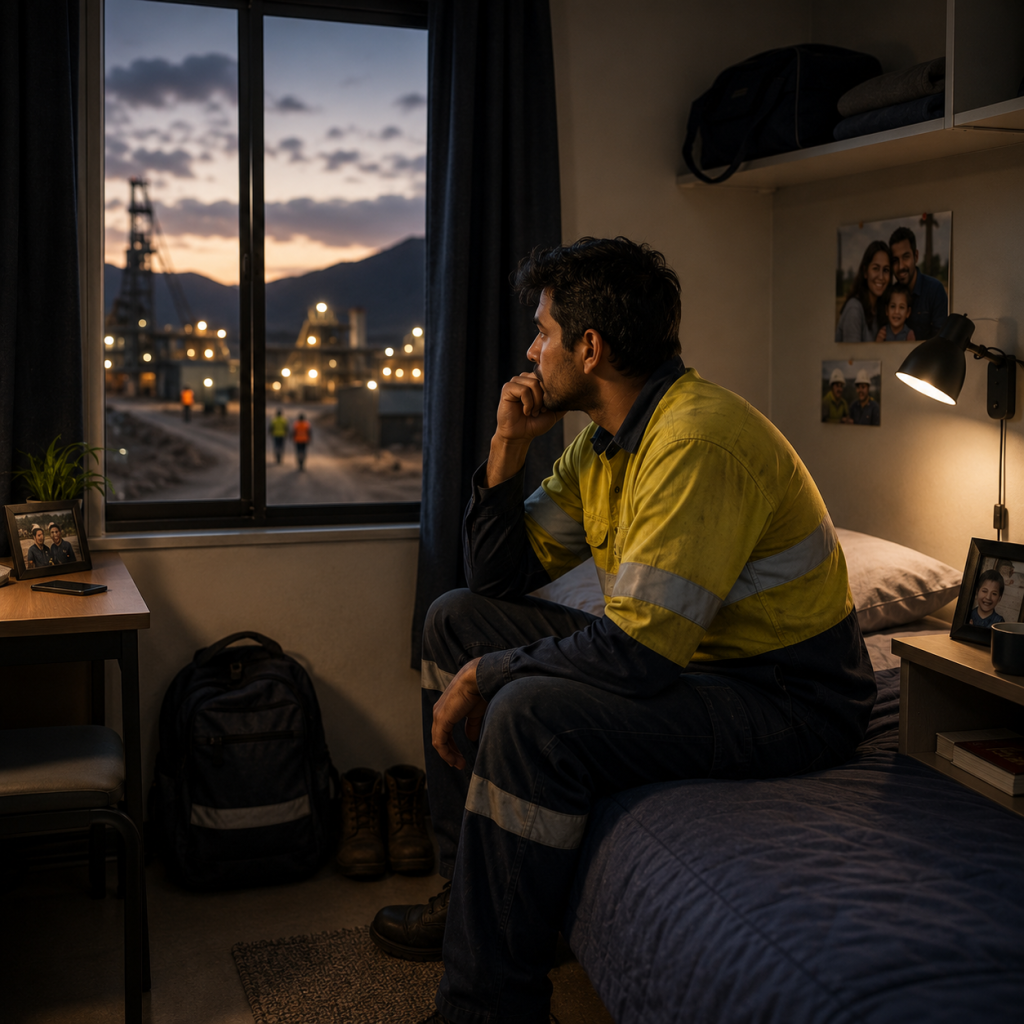
Why Loneliness and Disconnection Are Hidden Risks in Worker Welfare
Isolation is one of the most underestimated risks in worker welfare. Unlike physical hazards, it often develops quietly and invisibly. A worker may appear calm, productive, and physically present while internally experiencing deep loneliness, emotional exhaustion, or disconnection from the people around them.
For workers living far from home or operating in demanding environments, isolation can slowly erode mental wellbeing, concentration, morale, and safety performance.
Human beings are not designed for prolonged emotional disconnection.
People naturally rely on social connection, routine, familiarity, and emotional support to regulate stress and maintain psychological stability. When workers are separated from family, friends, cultural environments, or familiar support systems for extended periods, emotional strain begins accumulating beneath the surface.
From the worker’s perspective, isolation often feels like being forgotten.
Workers may miss:
- Family routines
- Conversations with loved ones
- Cultural traditions
- Emotional support systems
- Physical affection
- Familiar environments
- Community belonging
Over time, loneliness can become emotionally overwhelming.
Many workers struggle silently because they fear appearing weak, ungrateful, or emotionally vulnerable. They may continue performing their duties while internally experiencing sadness, emotional numbness, homesickness, or anxiety.
This emotional burden directly affects workplace functioning.
Workers experiencing isolation often show signs such as:
- Emotional withdrawal
- Reduced communication
- Fatigue
- Irritability
- Difficulty concentrating
- Reduced motivation
- Social avoidance
- Increased stress sensitivity
Isolation affects the nervous system and mental focus. A lonely or emotionally disconnected worker may struggle to remain psychologically present because part of their emotional energy is consumed by longing, sadness, or emotional fatigue.
In high-risk environments, this becomes a safety concern.
Workers under emotional strain are more vulnerable to:
- Distraction
- Poor decision-making
- Missed hazards
- Slower reactions
- Reduced situational awareness
- Increased risk-taking
- Emotional shutdown during pressure
From the leadership perspective, isolation must therefore be recognised as a genuine welfare and safety risk — not simply a personal issue.
Leaders sometimes assume that workers will naturally “adjust” to separation or difficult living conditions. But emotional resilience has limits. Prolonged isolation without meaningful support can gradually damage mental wellbeing and workplace engagement.
Importantly, isolated workers often stop communicating openly.
They may avoid raising concerns, withdraw from social interaction, or stop asking for support because they no longer feel emotionally connected to the people around them. Silence becomes a coping mechanism.
This emotional disengagement weakens:
- Teamwork
- Communication
- Morale
- Psychological safety
- Trust
The organisation loses not only worker wellbeing, but also awareness of emerging emotional and operational risks.
Preventing isolation requires intentional leadership and human-centred culture.
Leaders can reduce emotional isolation by:
- Encouraging healthy social connection
- Checking in with workers regularly
- Supporting communication with family
- Creating safe spaces for conversation
- Encouraging peer support
- Building inclusive accommodation communities
- Supporting recreation and group activities
- Training supervisors to recognise emotional withdrawal
Sometimes the most important intervention is simply helping workers feel noticed and emotionally connected again.
A worker who feels emotionally supported is more likely to:
- Stay engaged
- Communicate openly
- Seek help early
- Support teammates
- Participate socially
- Remain psychologically present
Leaders must also understand that connection does not require solving every emotional problem. Often, workers simply need reassurance that someone cares enough to notice their wellbeing.
Simple actions matter deeply:
- Asking how someone is coping
- Remembering family details
- Allowing time to call home
- Noticing emotional changes
- Creating opportunities for social interaction
- Listening without judgment
These moments communicate:
“You are not alone.”
“You matter here.”
“We care about your wellbeing.”
Those messages strengthen emotional resilience significantly.
Isolation also affects identity and belonging. Workers separated from their home environments may begin feeling emotionally disconnected from who they are outside work. Strong leadership helps maintain humanity by recognising workers as people with emotional lives, relationships, and personal struggles — not simply labour resources.
This is especially important in industries involving long-distance work, remote operations, or rotational schedules where workers may spend significant periods away from home.
The emotional cost of separation accumulates slowly but powerfully.
Leaders who ignore isolation often see increased:
- Turnover
- Conflict
- Withdrawal
- Fatigue
- Disengagement
- Mental health strain
- Safety incidents
Leaders who address isolation proactively create more connected, resilient, and psychologically healthy teams.
Because isolation fades when connection grows.
And in every workplace, one of the most powerful forms of protection is ensuring workers never feel emotionally alone while carrying the pressures of work, distance, and life itself.
