
Why Human Connection Matters Beyond the Workplace
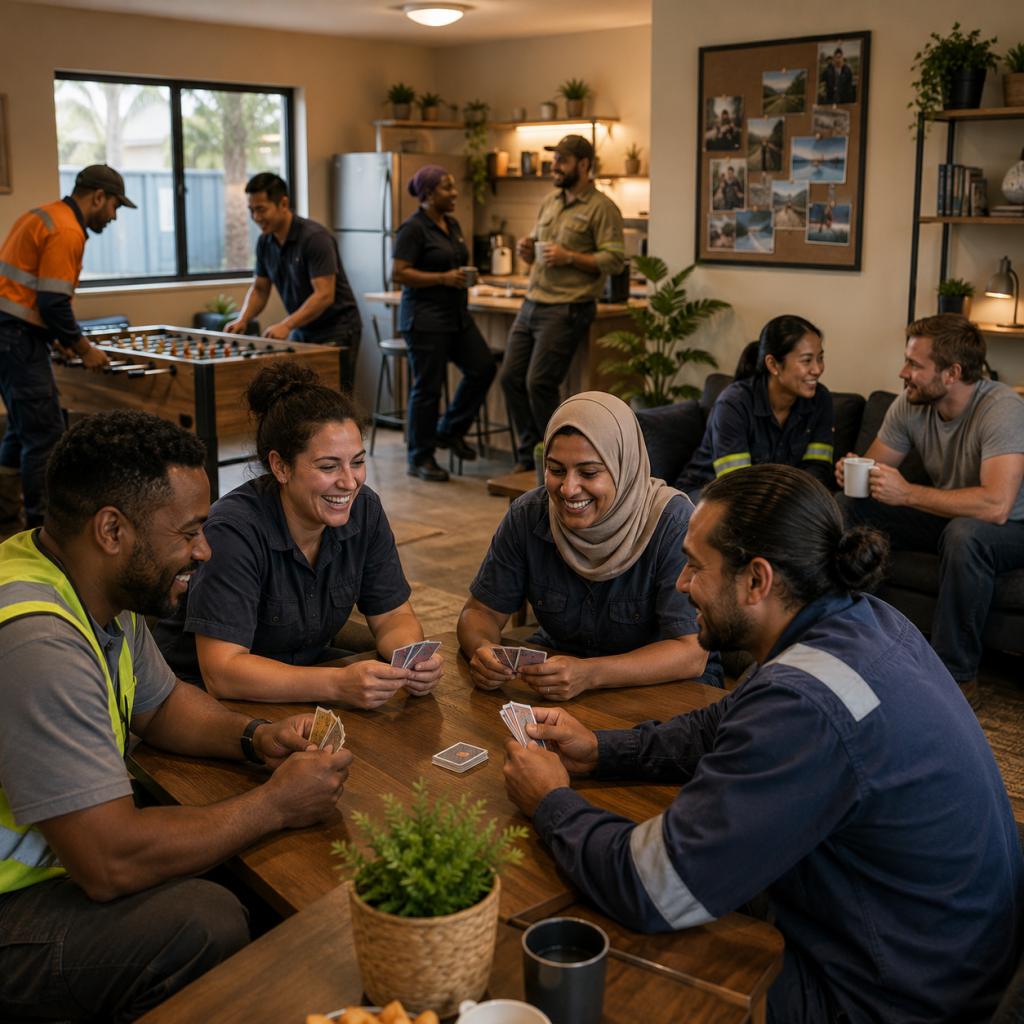
Worker accommodation is often viewed purely as a logistical necessity — a place where workers sleep between shifts before returning to work the next day. But accommodation is far more than housing. It becomes a living environment, a social system, and, for many workers far from home, a temporary community.
The emotional quality of that community directly affects wellbeing, morale, mental health, teamwork, and safety.
When workers feel connected to the people around them, they are more resilient during stress, more emotionally supported, and more likely to look out for one another. But when accommodation feels isolating, hostile, or emotionally cold, workers become withdrawn, fatigued, and disconnected.
From the worker’s perspective, community reduces loneliness.
Many workers live far from their families, cultural support systems, and familiar routines. They may spend weeks or months away from home, often in physically demanding environments where emotional stress accumulates quietly over time. Without connection, workers can begin feeling emotionally isolated even while surrounded by people.
A healthy accommodation community creates:
- Belonging
- Emotional support
- Friendship
- Stability
- Shared understanding
- Psychological comfort
Workers who feel connected to others are more likely to cope effectively with stress because they know they are not facing challenges alone.
Community also creates emotional safety.
Workers are more likely to check on one another, notice signs of fatigue or distress, and provide informal support during difficult moments. These human relationships become protective factors that strengthen mental wellbeing and resilience.
In contrast, environments lacking community often experience:
- Increased conflict
- Social isolation
- Tension between workers
- Emotional withdrawal
- Higher stress levels
- Poor morale
Workers may begin emotionally disconnecting not only from one another, but from the organisation itself.
From the leadership perspective, strong accommodation communities are not merely “nice to have.” They improve operational outcomes.
Workers who feel socially connected generally experience:
- Better morale
- Lower stress
- Improved emotional resilience
- Reduced turnover
- Better teamwork
- Stronger communication
- Safer behaviour
Human beings perform better when they feel they belong somewhere.
This is especially important in high-risk industries where workers depend heavily on teamwork, communication, and trust. Workers who build positive relationships outside work often collaborate more effectively during work because emotional familiarity strengthens trust.
Leaders must therefore understand that accommodation culture influences workplace culture.
A hostile or disconnected living environment eventually affects behaviour on site. Workers who experience ongoing conflict, loneliness, or emotional exhaustion in accommodation may arrive at work mentally drained, distracted, or irritable. Emotional fatigue accumulates across both environments.
Building community requires intentional effort from leadership.
Strong accommodation communities do not happen automatically simply because workers live near one another. Without positive structure and respectful leadership, shared living spaces can easily become emotionally fragmented.
Leaders can strengthen community by creating environments where workers feel socially supported and respected.
Practical steps include:
- Creating shared recreational spaces
- Encouraging group activities and sports
- Supporting cultural celebrations and events
- Providing clean, welcoming communal areas
- Ensuring respectful accommodation supervision
- Encouraging inclusive social interaction
- Supporting peer support networks
- Creating safe spaces for conversation
These initiatives help workers build relationships beyond job roles.
Importantly, accommodation supervisors play a major role in shaping emotional climate. Supervisors who lead with dignity, fairness, and emotional intelligence create calmer, more respectful living environments. Supervisors who ignore conflict or treat workers harshly often create tension that spreads throughout the community.
Leadership behaviour shapes emotional atmosphere.
Workers also need opportunities for positive emotional release and recreation. Without healthy outlets, accommodation can become emotionally stagnant, especially for workers far from home. Recreation, social connection, humour, and shared experiences help workers decompress psychologically after stressful shifts.
Simple moments matter:
- Shared meals
- Watching sport together
- Community events
- Cultural celebrations
- Group conversations
- Recreational activities
These moments restore humanity in environments that can otherwise become emotionally repetitive and isolating.
Importantly, community should never come at the expense of privacy or personal boundaries. Strong communities balance connection with respect for individual space, culture, and emotional needs.
Not every worker socialises in the same way. Some need more quiet recovery time, while others recharge socially. Inclusive leadership recognises these differences and creates environments where all workers can feel comfortable.
Leaders must also remain aware of conflict dynamics within accommodation settings. Shared living spaces naturally create tension at times due to different personalities, routines, languages, and cultural practices. Without proactive leadership, small frustrations can escalate into larger emotional or interpersonal problems.
Clear expectations around:
- Respect
- Cleanliness
- Noise
- Shared spaces
- Communication
- Cultural sensitivity
help prevent unnecessary conflict and maintain harmony.
Most importantly, strong accommodation communities remind workers that they are not alone.
This emotional reassurance has powerful psychological effects. Workers facing stress, fatigue, or homesickness cope more effectively when they feel emotionally connected to the people around them.
In many cases, coworkers become surrogate families while workers are away from home.
Leaders who recognise the emotional importance of these relationships create stronger, healthier, and safer environments overall.
Because accommodation is not just where workers sleep.
It is where they recover emotionally, rebuild mentally, and reconnect socially before facing the demands of another day.
And when leaders intentionally build community, they strengthen not only morale — but resilience, trust, wellbeing, and safety across the entire workforce.
