
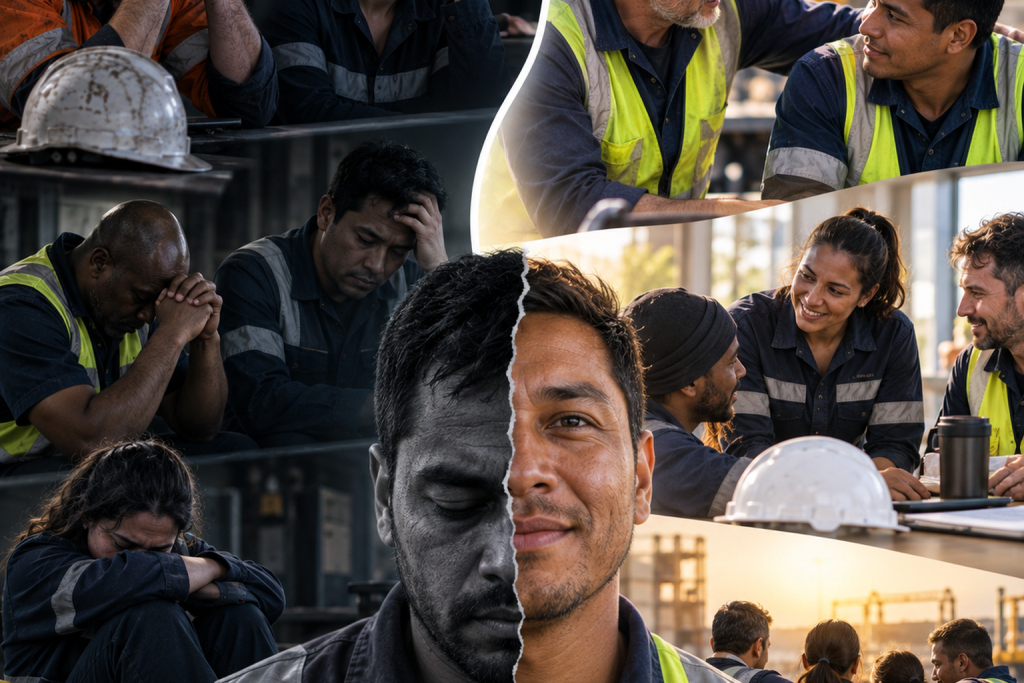
Why Emotional Suppression Damages Workers, Teams, and Safety Culture
Many workplaces unintentionally teach workers that strength means emotional silence.
Workers hear messages such as:
- “Push through.”
- “Don’t complain.”
- “Handle it.”
- “Be tough.”
- “Keep going no matter what.”
Over time, these messages create a culture where workers believe they must constantly appear emotionally strong, even when they are exhausted, overwhelmed, anxious, or struggling internally.
This emotional suppression carries a hidden cost.
Workers may continue functioning outwardly while inwardly carrying:
- Stress
- Fear
- Grief
- Fatigue
- Anxiety
- Loneliness
- Burnout
- Emotional overload
The workplace may still appear productive, but psychologically many workers are operating far beyond healthy emotional limits.
From the worker’s perspective, “always being strong” often feels exhausting.
Many workers fear:
- Looking weak
- Losing respect
- Being judged
- Burdening others
- Damaging career opportunities
- Appearing incapable
As a result, they hide emotional strain rather than seeking support.
This silence becomes dangerous because emotional pressure does not disappear simply because it is hidden.
Suppressed stress still affects:
- Concentration
- Emotional regulation
- Communication
- Patience
- Decision-making
- Hazard awareness
- Sleep quality
- Mental health
Workers may appear calm externally while internally struggling to cope.
Eventually, emotional suppression often surfaces through:
- Irritability
- Withdrawal
- Fatigue
- Burnout
- Conflict
- Anxiety
- Emotional numbness
- Reduced engagement
In some cases, workers break down unexpectedly because the nervous system can no longer sustain constant emotional pressure without release.
From the leadership perspective, cultures that glorify constant toughness create significant organisational risk.
Workers operating under emotional strain are more vulnerable to:
- Mistakes
- Poor judgment
- Communication breakdowns
- Conflict escalation
- Mental health difficulties
- Unsafe behaviour
Importantly, emotional suppression weakens Worker Voice.
Workers who believe vulnerability is unsafe are less likely to:
- Admit fatigue
- Ask for help
- Report emotional strain
- Raise concerns
- Discuss mistakes honestly
- Communicate openly during pressure
This creates environments where workers suffer silently while risks remain hidden.
Strength Is Not Emotional Suppression
One of the biggest misconceptions in workplace culture is confusing emotional suppression with resilience.
Real resilience is not pretending stress does not exist.
Real resilience involves:
- Recognising strain early
- Seeking support when needed
- Communicating honestly
- Recovering effectively
- Managing emotions responsibly
- Supporting others during difficulty
Emotionally healthy workers are not workers who never struggle.
They are workers who feel psychologically safe enough to acknowledge struggle without shame.
This distinction matters deeply.
From the worker’s perspective, constantly pretending to be fine creates emotional isolation. Workers may feel:
“No one understands.”
“I have to carry this alone.”
“I cannot let anyone see I’m struggling.”
Isolation intensifies stress significantly.
The Role of Leadership in Emotional Culture
Leaders strongly influence whether workers feel safe expressing emotional strain.
Leaders who unintentionally promote emotional suppression often:
- Reward overwork excessively
- Praise endurance without recovery
- Ignore emotional warning signs
- Dismiss stress concerns
- Treat vulnerability as weakness
- Prioritise productivity over wellbeing
These behaviours teach workers:
“Your emotions are not welcome here.”
In contrast, emotionally intelligent leaders create environments where workers feel psychologically safe enough to communicate honestly about stress and fatigue.
Strong leaders:
- Check in with workers regularly
- Notice emotional withdrawal
- Encourage healthy recovery
- Respond calmly to vulnerability
- Model emotional maturity themselves
- Protect dignity during difficult conversations
- Normalise asking for support
This creates healthier emotional culture.
Importantly, leaders do not need to become therapists to support emotional wellbeing.
Workers often need:
- Respect
- Understanding
- Psychological safety
- Human connection
- Calm leadership
- Permission to be honest
These simple conditions reduce emotional isolation dramatically.
Why Emotional Safety Improves Performance
Workers perform best when emotional energy is available for:
- Focus
- Communication
- Awareness
- Teamwork
- Problem-solving
Constant emotional suppression drains that energy.
Workers using most of their psychological capacity simply to “hold it together” have less mental space available for safe and effective performance.
This is especially dangerous in high-risk industries where sustained awareness and decision-making are essential.
Emotionally safe workplaces improve:
- Communication
- Trust
- Team resilience
- Morale
- Hazard reporting
- Psychological recovery
- Long-term performance
Workers become more engaged because they no longer need to hide significant parts of their human experience.
The Long-Term Cost of Emotional Silence
When emotional suppression becomes normalised, organisations often experience:
- Burnout
- High turnover
- Emotional withdrawal
- Conflict
- Mental health strain
- Reduced engagement
- Increased safety incidents
- Low morale
Workers eventually disconnect emotionally from environments where they feel unable to be human.
The hidden cost is not only individual suffering.
It is cultural deterioration.
Because workplaces built entirely on emotional suppression eventually lose:
- Trust
- Openness
- Psychological safety
- Genuine teamwork
- Human connection
And those losses affect safety and performance far more than many organisations realise.
The strongest workplaces are not those where workers never struggle.
They are workplaces where workers feel safe enough to speak honestly, recover properly, support one another, and remain emotionally healthy while still maintaining high standards and accountability.
Because strength is not the absence of emotion.
True strength is creating environments where people can remain both professional and human at the same time.
