
Why Leadership Behaviour Shapes Culture More Than Leadership Words
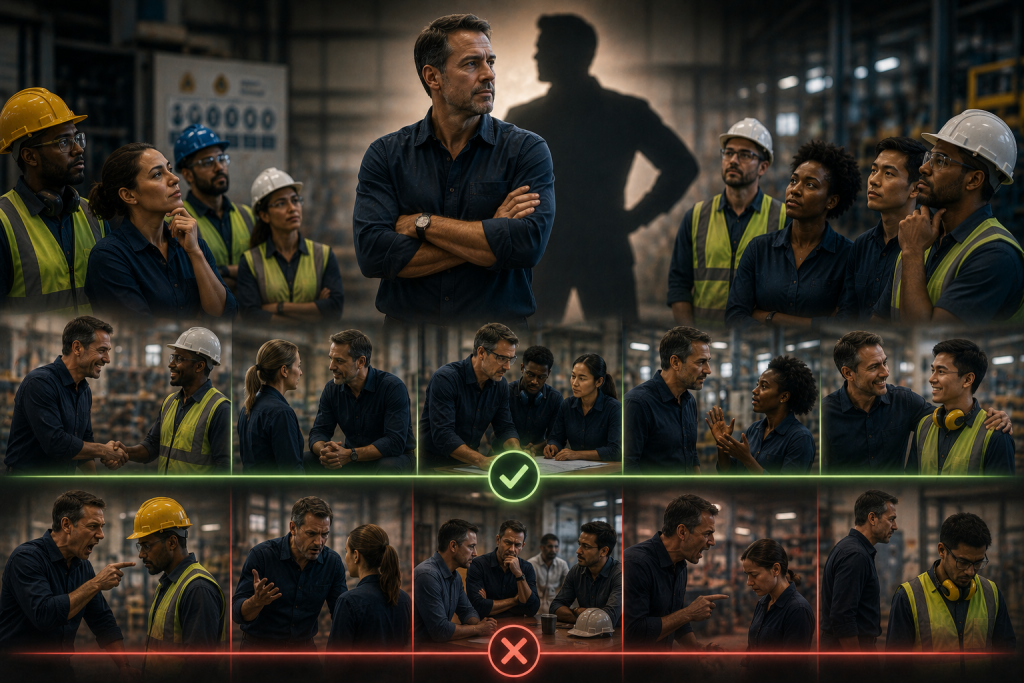
Every leader casts a shadow.
Not a physical shadow, but a behavioural one — a constant influence created through actions, reactions, tone, decisions, and emotional behaviour. Workers observe this shadow continuously, even when leaders believe nobody is paying attention.
And what workers observe shapes workplace culture far more powerfully than policies, slogans, or speeches ever will.
Leaders often focus heavily on what they say:
- Safety briefings
- Mission statements
- Company values
- Team expectations
- Motivational messages
But workers pay closer attention to what leaders actually do.
Workers notice:
- How leaders speak to people
- How leaders react under pressure
- Whether leaders follow safety rules themselves
- Whether leaders listen respectfully
- Whether leaders remain calm during mistakes
- Whether leaders show fairness consistently
- Whether leaders treat workers with dignity
- Whether leaders “walk the talk”
These observations become the true culture of the workplace.
From the worker’s perspective, leadership behaviour reveals what is genuinely valued inside the organisation.
If leaders preach safety but rush work aggressively, workers learn:
“Production matters more than safety.”
If leaders talk about respect but humiliate workers publicly, workers learn:
“Dignity is optional.”
If leaders encourage honesty but react defensively when concerns are raised, workers learn:
“Silence is safer than truth.”
Workers trust behaviour more than words because behaviour feels emotionally honest.
The leadership shadow therefore becomes one of the strongest psychological influences in the workplace.
Importantly, workers do not only observe leaders during formal situations. They watch leadership most carefully during:
- Conflict
- Emergencies
- Mistakes
- Delays
- Stress
- Fatigue
- Operational pressure
These moments reveal emotional truth.
Anyone can appear calm, respectful, or safety-focused during comfortable conditions. But workers judge leadership credibility based on how leaders behave when pressure increases.
Do leaders remain emotionally controlled?
Do they protect dignity under stress?
Do they follow the rules themselves?
Do they prioritise safety when deadlines tighten?
These observations shape trust rapidly.
From the leadership perspective, the shadow can either strengthen or weaken workplace culture every day.
A positive leadership shadow creates:
- Psychological safety
- Trust
- Open communication
- Stronger teamwork
- Greater accountability
- Emotional stability
- Higher safety engagement
A negative leadership shadow creates:
- Fear
- Silence
- Confusion
- Emotional withdrawal
- Cynicism
- Reduced reporting
- Unsafe shortcuts
Workers naturally mirror the emotional and behavioural patterns leadership normalises.
If leaders:
- Listen calmly
- Treat people respectfully
- Admit mistakes honestly
- Follow procedures consistently
- Respond fairly under pressure
workers begin modelling those same behaviours with one another.
But if leaders:
- Shout
- Ignore procedures
- Humiliate workers
- React emotionally
- Prioritise speed over safety
those behaviours spread just as quickly.
Culture spreads through observation.
This is why leadership inconsistency becomes so damaging. Workers become emotionally confused when leadership words and actions do not align. Mixed signals weaken trust because workers no longer know which message reflects reality.
For example:
A leader may say:
“Safety is our priority.”
But if workers repeatedly observe:
- Unsafe rushing
- Ignored concerns
- Punishment for delays
- Leaders bypassing procedures
then the emotional message workers receive is very different.
Workers believe the behaviour they see — not the slogan they hear.
Importantly, leaders cast shadows even during small interactions.
Workers notice:
- Whether leaders greet people
- Whether leaders show patience
- Whether they acknowledge effort
- Whether they interrupt workers
- Whether they remain calm during frustration
- Whether they treat all workers fairly
These moments may seem insignificant individually, but collectively they define emotional climate.
Small behaviours accumulate into culture.
Leaders must therefore become intentionally self-aware.
Strong leaders regularly ask themselves:
“What am I teaching through my behaviour?”
“What emotional environment do I create?”
“What message does my reaction send?”
“What are workers learning from watching me?”
Because leadership influence is often strongest when leaders are not consciously trying to influence anyone at all.
The leadership shadow is especially powerful in high-risk industries where workers depend heavily on trust, communication, and emotional stability. Workers look to leaders not only for instruction — but for emotional direction.
A calm leader stabilises teams.
A fearful leader spreads anxiety.
A respectful leader normalises dignity.
An aggressive leader normalises fear.
Leadership behaviour therefore becomes part of the safety system itself.
Importantly, the leadership shadow also affects Worker Voice. Workers decide whether it is safe to speak based largely on observed leadership behaviour.
If workers see leaders:
- Welcoming questions
- Handling mistakes fairly
- Responding respectfully
- Encouraging discussion
they become more willing to speak openly.
But if workers observe:
- Punishment
- Shame
- Defensiveness
- Emotional volatility
silence quickly becomes the safer option.
This is why the most effective leaders understand that culture is not built primarily through formal communication.
Culture is built through repeated emotional experience.
Workers remember:
- How leaders made them feel
- How leaders behaved under stress
- Whether leaders treated people with dignity
- Whether leadership behaviour matched leadership words
Ultimately, workers do not follow leadership philosophy.
They follow leadership example.
And the shadow leaders cast every day quietly shapes:
- Trust
- Morale
- Communication
- Psychological safety
- Team behaviour
- Safety culture
Whether leaders realise it or not.
Because culture is not what leaders say.
Culture is what workers see.
