adminPPCI09

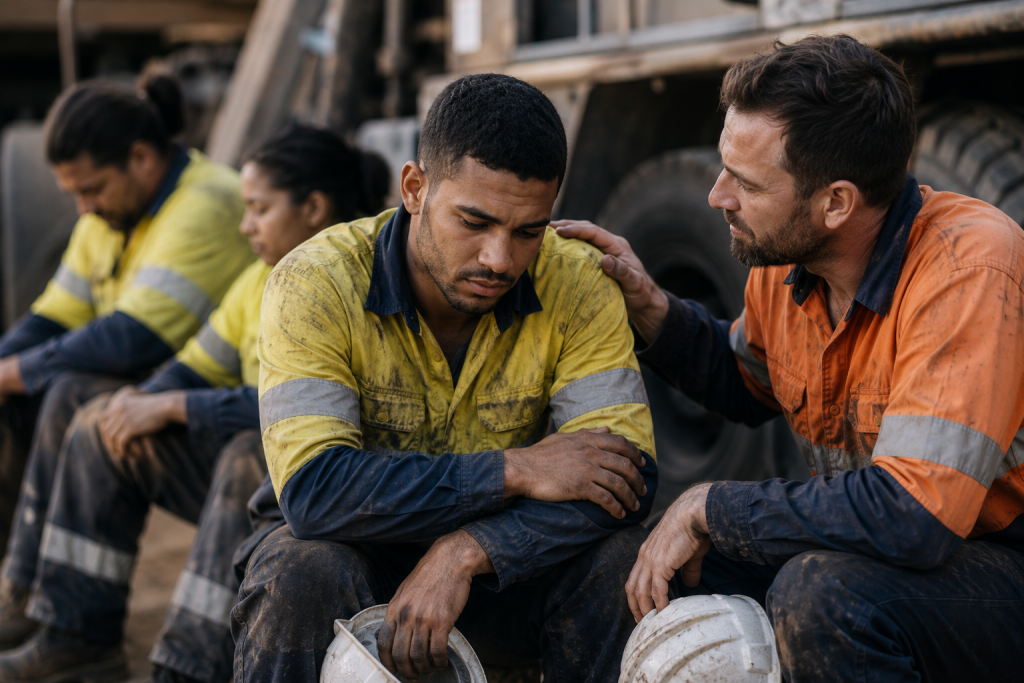
Why Workers Withdraw Emotionally — And How Leaders Can Prevent It

Understanding the Silent Safety Risk Hidden in Workplace Culture Emotional withdrawal is one of the most dangerous invisible risks in any workplace. Unlike physical hazards, it cannot be seen on a checklist or measured by equipment inspections. Yet its impact on safety, communication, morale, and performance can be profound. A worker may be physically present

Why Workers Withdraw Emotionally — And How Leaders Can Prevent It Read More »

Courage Through Vulnerability

The Strength to Be Human Vulnerability is often misunderstood in leadership. It is frequently associated with weakness, uncertainty, or loss of authority. In reality, vulnerability is courage in action. It is the strength to lead with honesty, humility, and humanity. Vulnerable leadership does not remove boundaries or accountability. It strengthens them by replacing fear with

Courage Through Vulnerability Read More »

The Emotional Contract Between Workers and Leaders

The Invisible Agreement That Shapes Trust, Safety, and Workplace Culture Every workplace operates through two contracts. The first is visible, formal, and legally binding — the employment contract. It outlines working hours, salaries, responsibilities, procedures, and organisational expectations. It defines what workers are required to do and what organisations are obligated to provide. But beneath

The Emotional Contract Between Workers and Leaders Read More »

The Small Things That Make Workers Feel Human

Worker welfare is often discussed through the language of policies, compliance, and systems. Organisations develop procedures, safety frameworks, reporting structures, and operational standards designed to protect and support employees. These are important and necessary foundations. But beneath every formal structure lies another system that is often far more influential — the human system created through

The Small Things That Make Workers Feel Human Read More »

Dialogue: Consequences and Character

CharactersMartin – Mid-50s. Experienced, pragmatic, increasingly cynical. Believes society has lost its moral compass.Aisha – Late 20s. Thoughtful, values-driven. Believes purpose, integrity, and character still matter deeply. SettingOffice break room, late afternoon. Martin:You know, Aisha, sometimes I look around and struggle to recognise the world we’re living in. People do things today that would have

Dialogue: Consequences and Character Read More »

Authentic Leadership

Leading With Honesty, Consistency, and Humanity Authenticity in leadership is not about performance, image, or carefully curated personas. It is the courage to lead from who you genuinely are — guided by values, grounded in self-awareness, and expressed through consistent behaviour. People follow leaders they trust. Trust grows when leaders are real. Authentic leadership creates

Authentic Leadership Read More »

The Relationship Between Worker Welfare and ESG: The Human Heartbeat of Sustainability

Sustainability is often spoken of in terms of carbon footprints, energy efficiency, and governance frameworks. But there is a deeper truth at the centre of every responsible organization:Worker welfare is the human heartbeat of ESG. Without the safety, dignity, and wellbeing of the people who make the work possible, there is no true sustainability—only a

The Relationship Between Worker Welfare and ESG: The Human Heartbeat of Sustainability Read More »

Building Worker Welfare: A Leadership Imperative

Worker welfare is no longer a peripheral concern—it is the anchor of sustainable, ethical, and resilient business. This truth was unmistakably reinforced during the Building Responsibly Bi-Annual Meeting (November 2025), where global leaders emphasized one core message:True welfare is not compliance. It is culture. It is leadership. It is humanity in action. And today, that

Building Worker Welfare: A Leadership Imperative Read More »

Shopping Cart
Translate »

You cannot copy content of this page

Scroll to Top